


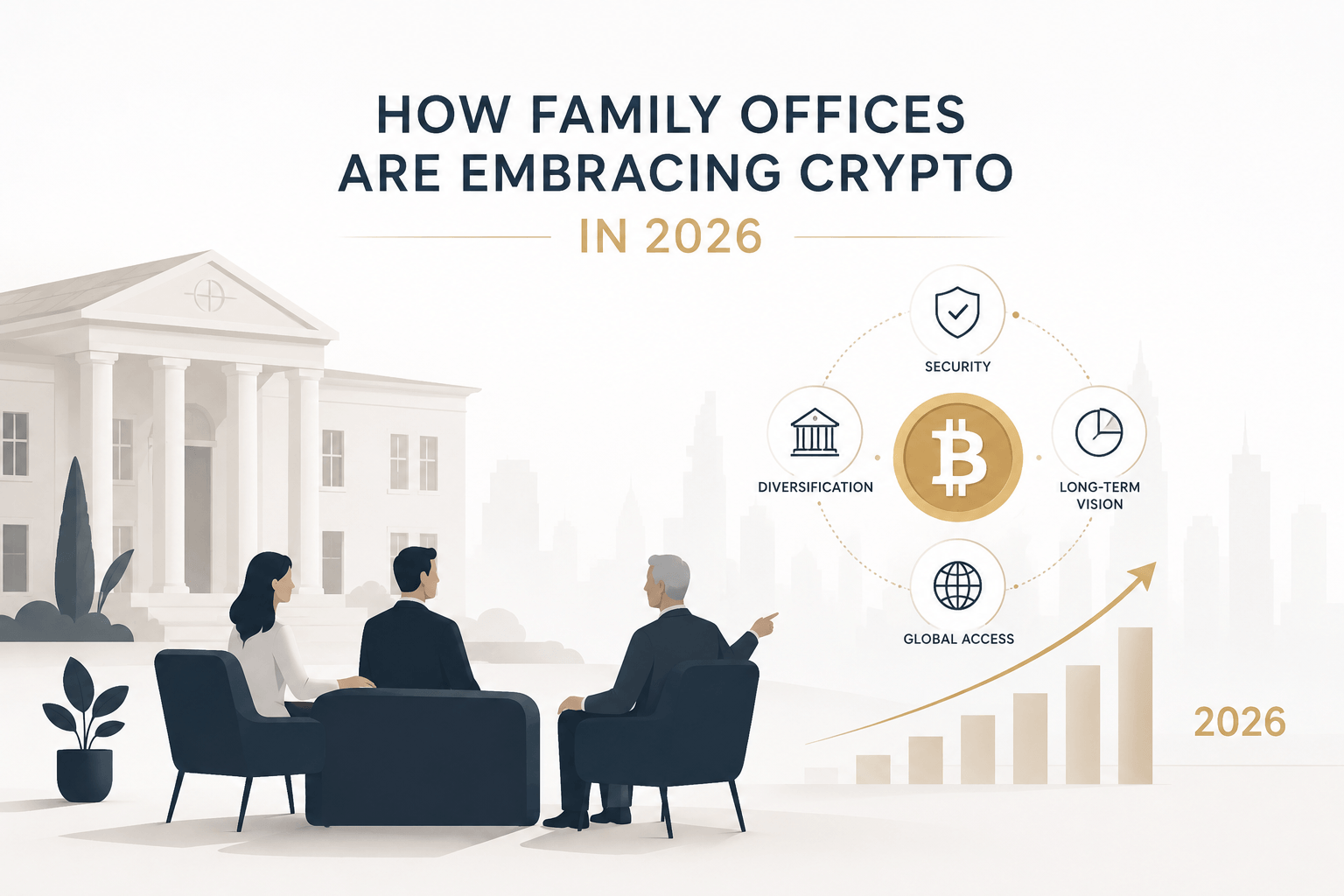
For years, family offices watched the cryptocurrency market from the sidelines. Many viewed digital assets as speculative, volatile, and difficult to fit into traditional wealth preservation strategies. That attitude has changed significantly. In 2026, crypto is no longer seen solely as a high-risk investment class. Instead, it has become part of broader portfolio discussions among wealthy families managing long-term capital.
Table of Contents
The growing interest in crypto among family offices reflects a wider shift taking place across global financial markets. Better infrastructure, improved regulation, and increased institutional participation have made digital assets more accessible than ever. As a result, trends of crypto adoption by family offices continue to accelerate, creating new opportunities for investors willing to explore the sector.
Why Family Offices Are Looking at Crypto Differently
Unlike hedge funds or venture capital firms, family offices often prioritize wealth preservation over short-term returns. This cautious approach explains why many entered the crypto market later than other investors. However, several developments have changed the conversation. The launch of regulated investment products, institutional-grade custody services, and clearer compliance frameworks has reduced many of the concerns that previously kept family offices away.
At the same time, younger generations are becoming more involved in wealth management decisions. Many heirs and next-generation family office leaders have grown up alongside digital technology and view cryptocurrency as a legitimate asset class rather than a speculative trend. This shift is driving greater crypto adoption among family offices across different regions and investment styles.
Family Offices and Crypto: Beyond Bitcoin
Early discussions about family offices with crypto focused almost entirely on Bitcoin. Today, investment strategies are becoming more sophisticated. Many family offices now evaluate opportunities across several categories:
- Bitcoin and Ethereum
- Tokenized real-world assets
- Blockchain infrastructure projects
- Crypto-focused venture funds
- Stablecoin-based yield strategies
Rather than making aggressive bets, most offices allocate a relatively small percentage of their portfolios to digital assets. The goal is often diversification rather than speculation. This measured approach has helped support the broader adoption of cryptocurrency investments by family offices without significantly increasing overall portfolio risk.
Institutional Infrastructure Is Changing the Market
One of the most important trends of crypto adoption by family offices is the growing availability of institutional infrastructure. A few years ago, managing digital assets often required specialized technical knowledge. Today, family offices can access professional custody providers, regulated investment vehicles, and advanced reporting solutions.
The growth of institutional crypto trading has also improved liquidity and execution quality. Large investors can now buy or sell substantial positions through OTC desks and institutional platforms without creating significant market disruption. These developments make cryptocurrency investing feel more familiar to wealth managers who are accustomed to traditional financial markets.
How Crypto-Engaged Family Offices Build Portfolios
Not all family offices approach digital assets in the same way. Some maintain small allocations to Bitcoin as a hedge against inflation or currency debasement. Others actively seek exposure to blockchain innovation through venture investments. Many crypto-engaged family offices follow a gradual strategy. A typical allocation process may include:
|
Investment Type |
Purpose |
|
Bitcoin |
Long-term store of value |
|
Ethereum |
Exposure to blockchain ecosystems |
|
Venture Funds |
Access to emerging projects |
|
Tokenized Assets |
Portfolio diversification |
This balanced approach allows family offices to participate in market growth while maintaining their traditional focus on capital preservation.
Challenges Still Remain
Despite growing adoption, several challenges continue to influence family office investments in cryptocurrency. Volatility remains a concern. While crypto markets have matured, price fluctuations can still exceed those seen in traditional asset classes. Regulatory differences between jurisdictions also create complexity for globally diversified families. Tax treatment, reporting requirements, and compliance obligations vary significantly from country to country.
Education remains another important factor. Many wealth managers continue to invest time in understanding blockchain technology, digital asset custody, and market structure before increasing their exposure. These challenges have not stopped adoption, but they encourage a more disciplined investment process.
What 2026 Reveals About the Future
The most notable development in 2026 is that cryptocurrency is no longer a fringe topic within wealth management circles. The growing interest in crypto among family offices reflects a broader recognition that digital assets have become part of the modern financial landscape. While few family offices are allocating the majority of their portfolios to crypto, many now consider digital assets alongside equities, private equity, real estate, and fixed income. This evolution suggests that crypto is moving from an experimental allocation toward a recognized component of diversified portfolios.
Conclusion
The rise of crypto adoption by family offices highlights how rapidly the investment landscape has evolved. Improved infrastructure, stronger regulatory frameworks, and the expansion of institutional crypto trading have made digital assets more accessible to sophisticated investors.
As crypto adoption among family offices continues to grow, investment strategies are becoming increasingly structured and professional. Whether through direct holdings, venture investments, or tokenized assets, family office investments in cryptocurrency are becoming a meaningful part of long-term wealth management discussions.
 usdt
usdt bnb
bnb