



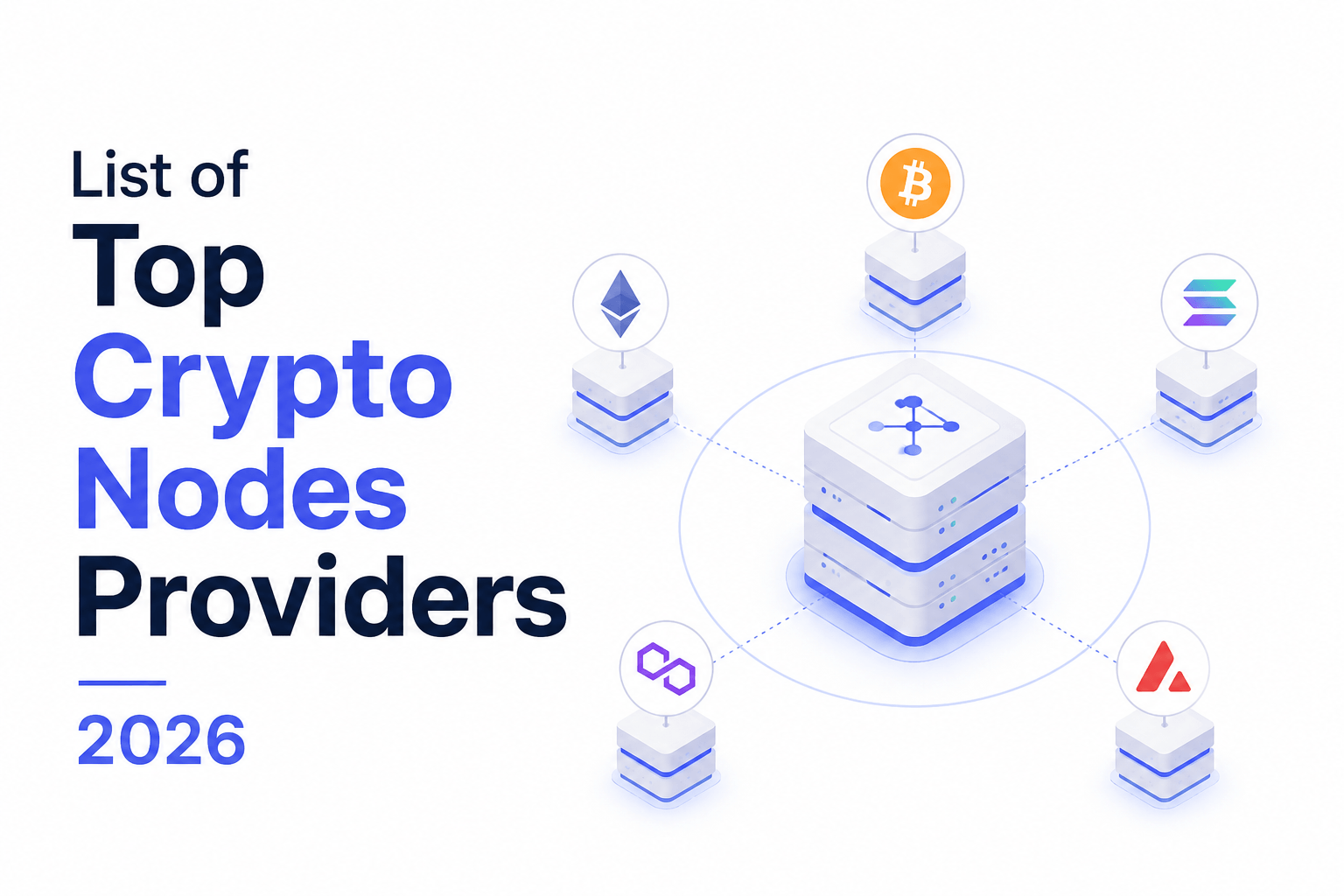
If you're building on blockchain, you need reliable infrastructure behind you. Choosing the right RPC provider can make the difference between smooth operations and constant headaches. Your app depends on nodes that stay online, respond fast, and don't nickel-and-dime you with rate limits. We've looked at what's available right now and put together this list of providers that actually get the job done.
Table of Contents
1. NOWNodes
NOWNodes stands out as a solid choice for teams that need immediate access to blockchain networks. They offer what amounts to the wide coverage —120+ blockchains—which means you're not juggling multiple providers just to reach different ecosystems. The platform supports everything from Ethereum and Solana to smaller networks like Dogecoin and Zcash, so if you're doing anything from simple queries to complex dApp interactions, you've got crypto nodes ready to go.
What makes NOWNodes worth considering is that they charge the same for unlimited RPS on all paid plans. No rate limits. If you're scaling, that matters. Their infrastructure runs on 2n+1 node redundancy across geobalanced US and Europe locations, backed by 99.95% uptime, with 24/7 support monitoring everything. They've built trust with teams at Tangem, Trust Wallet, Exodus, and CoinGate. Your connection to the blockchain shouldn't be a bottleneck, and with NOWNodes, it doesn't have to be.
Key features: 120+ blockchains supported, unlimited RPS on paid plans, 99.95% uptime SLA, 2n+1 node redundancy, free tier available.
2. Alchemy
Alchemy has become the default choice for a lot of developers working on Ethereum and Polygon. They handle the infrastructure complexity so you can focus on your code. The platform gives you monitoring and debugging tools that most other providers don't offer, and they've invested heavily in making sure their nodes stay responsive even during network congestion. Teams like OpenSea and Uniswap rely on them, which says something about reliability at scale. You get access to enhanced APIs that let you do things beyond standard RPC calls, plus their dashboard is genuinely useful for tracking how your app is performing. If you're comfortable paying for it, Alchemy's enterprise tiers unlock white-glove support and custom infrastructure configurations.
Key features: Enhanced APIs beyond standard RPC, real-time monitoring, Ethereum and Polygon focus, enterprise support options, dedicated endpoints available.
3. QuickNode
QuickNode built their business around the idea that RPC providers should actually care about performance. They've got nodes spread across data centers worldwide, which means lower latency no matter where your users are calling from. You get a dashboard that actually shows you what's happening with your requests in real time. WebSocket support is included as standard. If you're on Solana, they've optimized specifically for that chain because Solana's got different needs than Ethereum. QuickNode charges per request unit, which scales predictably with your traffic.
Key features: Global node distribution, WebSocket support, comprehensive analytics, Solana optimization, transparent pricing structure.
4. Infura
ConsenSys owns them, so they've got resources behind them that a lot of other providers don't have access to. They're focused on Ethereum—that's their main thing—and if you're doing anything in the Ethereum world, Infura's been tested enough times that you know it'll work. The documentation is solid, which matters when you're integrating. They throw in tools for simulating transactions and verifying contracts, stuff that actually makes your life easier as a developer. You can start free if you're just prototyping, then move to a paid plan when you go live.
Key features: Ethereum ecosystem specialist, tested production stability, transaction simulation tools, contract verification, free tier for development.
5. Pocket Network
Pocket Network takes a different approach by running as a decentralized protocol. Instead of relying on a single company's infrastructure, requests get distributed across a network of node operators who stake POKT tokens. This model means there's less single-point-of-failure risk and no corporate entity that could go under and take your service with it. They support a growing list of blockchains and their pricing stays competitive because they're not trying to extract maximum margin from users. If decentralization matters to your project's philosophy, Pocket Network deserves serious consideration. Their model also means the network improves as more operators join, which is different from centralized providers that have fixed infrastructure.
Key features: Decentralized architecture, POKT staking incentives, growing blockchain support, no single point of failure, competitive pricing model.
6. Ankr
Ankr calls their offering "Web3 infrastructure simplified," and they actually mean it. You can connect to 20+ blockchains without having to become a node operator yourself. They let you run both public endpoints and dedicated ones if you need your own private infrastructure. Their Stkr product is interesting—you stake crypto while your nodes keep running, so you're generating passive income while your app stays connected. The interface is designed for people who don't want to become infrastructure experts. You can get up and running pretty fast.
Key features: 20+ blockchain support, public and private node options, staking integration, simplified interface, dedicated endpoint availability.
So what does 2026 look like for RPC providers? There's more competition now than before, and honestly that's good for you. Each of these providers does something different. If you need wide coverage across the most chains, NOWNodes gets you going with 120+ blockchains and no rate limits on paid plans. If you want specialized tools and detailed monitoring, Alchemy and QuickNode both deliver that. If decentralization is important to your project, Pocket Network offers a genuinely different approach. Don't just pick one based on reputation. Run actual tests with your workload before committing to anything long-term. Your infrastructure decisions matter more than you might think.
 usdt
usdt bnb
bnb